Oncology Director
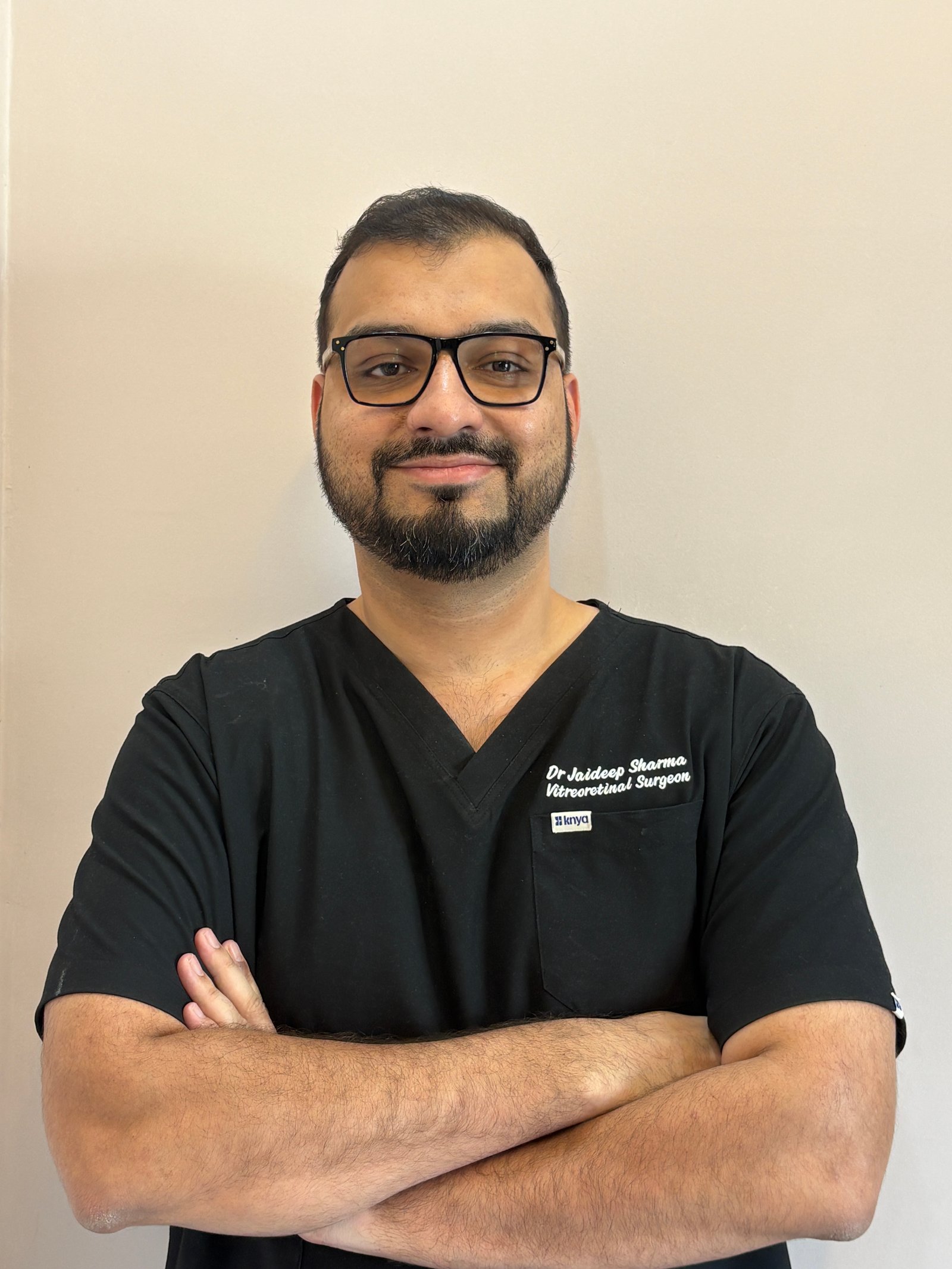
Dr. Jaideep Sharma
Retina & Ocular Oncology Specialist
Trained at prestigious institutions, Dr. Jaideep brings rare expertise to the management of intraocular tumors. His priority protocol is absolute: first preserve the life of the patient, second preserve the physical eye, and third preserve functional vision.
Why Choose Prasan Nethralaya for Oncology Care?
A cancer diagnosis requires immediate, uncompromising care. We provide a sanctuary of clinical excellence and compassion for both adult and pediatric patients.
Multi-Disciplinary Tumor Board
We do not work in isolation. Dr. Jaideep coordinates directly with pediatric oncologists, radiation physicists, and interventional radiologists to build a comprehensive, life-saving treatment plan.
Eye Preservation Focus
While saving a life is our ultimate mandate, we utilize the most advanced targeted therapies (like IAC and Plaque Brachytherapy) to aggressively save the physical eye whenever medically possible.
Pediatric Anesthesia Safety
For infants requiring Examinations Under Anesthesia (EUA), we partner with elite pediatric anesthesiologists to ensure your child is monitored and safe throughout every diagnostic and surgical step.
Your Oncology Care Journey
From the moment of diagnosis to lifelong monitoring, we stand by you with a clear, structured roadmap for survival and recovery.
Rapid Diagnostics
Priority scheduling for multimodal imaging, ultrasound, and EUAs to instantly stage the tumor.
Tumor Board Review
Collaborative case review with systemic oncologists to determine the safest, most effective intervention.
Targeted Treatment
Execution of specialized protocols: Brachytherapy, IAC Chemotherapy, Lasers, or precise surgical excision.
Lifelong Monitoring
Strict, regular follow-ups to ensure total tumor regression and manage any late-onset radiation side effects.
Ocular Malignancies

Retinoblastoma
A highly aggressive, life-threatening pediatric cancer of the retina. Often detected by a white glow in the pupil (leukocoria). Requires immediate targeted therapy.

Uveal Melanoma
The most common primary eye cancer in adults. Develops in the pigment-producing cells of the eye. Treatment focuses on halting tumor growth and preventing metastasis.
Advanced Oncology Technology
Precision medicine requires precision instruments. We utilize world-class diagnostic equipment to measure tumors down to the micron.
High-Resolution B-Scan Ultrasound
Essential for diagnosing tumors hidden deep behind the eye or obscured by dense cataracts. It accurately measures the exact millimeter thickness and density of intraocular masses to track regression.
RetCam Pediatric Imaging
A specialized, wide-field digital imaging system designed specifically for the tiny eyes of infants. It allows us to capture 130-degree views of the retina to safely stage Retinoblastoma during an EUA.
Custom Plaque Brachytherapy
We facilitate the creation of customized, gold-shielded radioactive plaques. These devices deliver mathematically precise radiation exclusively to the tumor, shielding the brain and surrounding healthy tissue.
Patient
Questions.
Honest, clinical clarity regarding diagnosis, treatment options, and long-term prognosis.
Symptoms can include a dark spot growing on the iris or conjunctiva, a sudden unexplained change in vision or visual field, a persistent lump on the eyelid, or in children, a white glow in the pupil (leukocoria) visible in photographs.
Yes, many eye cancers, especially when caught early, are highly curable. The primary goal of an ocular oncologist is always to save the patient's life, followed by saving the physical eye, and finally, preserving as much vision as possible.
Retinoblastoma is a rare, aggressive eye cancer that develops in the retina, almost exclusively affecting young children. Early detection is crucial for life-saving and eye-saving treatments like targeted chemotherapy and laser therapy.
Not necessarily. While complete removal of the eye (enucleation) is sometimes necessary to save a life, modern ocular oncology employs advanced techniques like plaque brachytherapy (targeted radiation) and localized chemotherapy that often allow the surgeon to destroy the tumor while preserving the physical eye.
Most eye freckles (choroidal nevi) are entirely benign, much like freckles on your skin. However, just like skin moles, they can rarely transform into melanoma. They require regular, photographic monitoring by a specialist to ensure they are not growing or changing shape.
Seek Immediate Expert Care.
Ocular malignancies require urgent, specialized evaluation. Do not wait to schedule an oncology screening.
Book Priority Oncology Screen