Understanding Primary Eye Cancer
Uveal Melanoma (often referred to as Choroidal Melanoma) is the most common primary eye cancer in adults. It originates in the melanocytes—the same pigment-producing cells that give your eyes their color and cause freckles on your skin. These tumors grow in the uveal tract, a highly vascular layer hidden deep inside the wall of the eye beneath the retina.
Because these tumors develop internally, they are completely invisible from the outside. They are entirely painless and often produce absolutely zero symptoms in their early stages. The vast majority of ocular melanomas are discovered incidentally during a routine, dilated eye exam when a specialist spots a raised, dark mass at the back of the eye.
The Diagnostic Workup
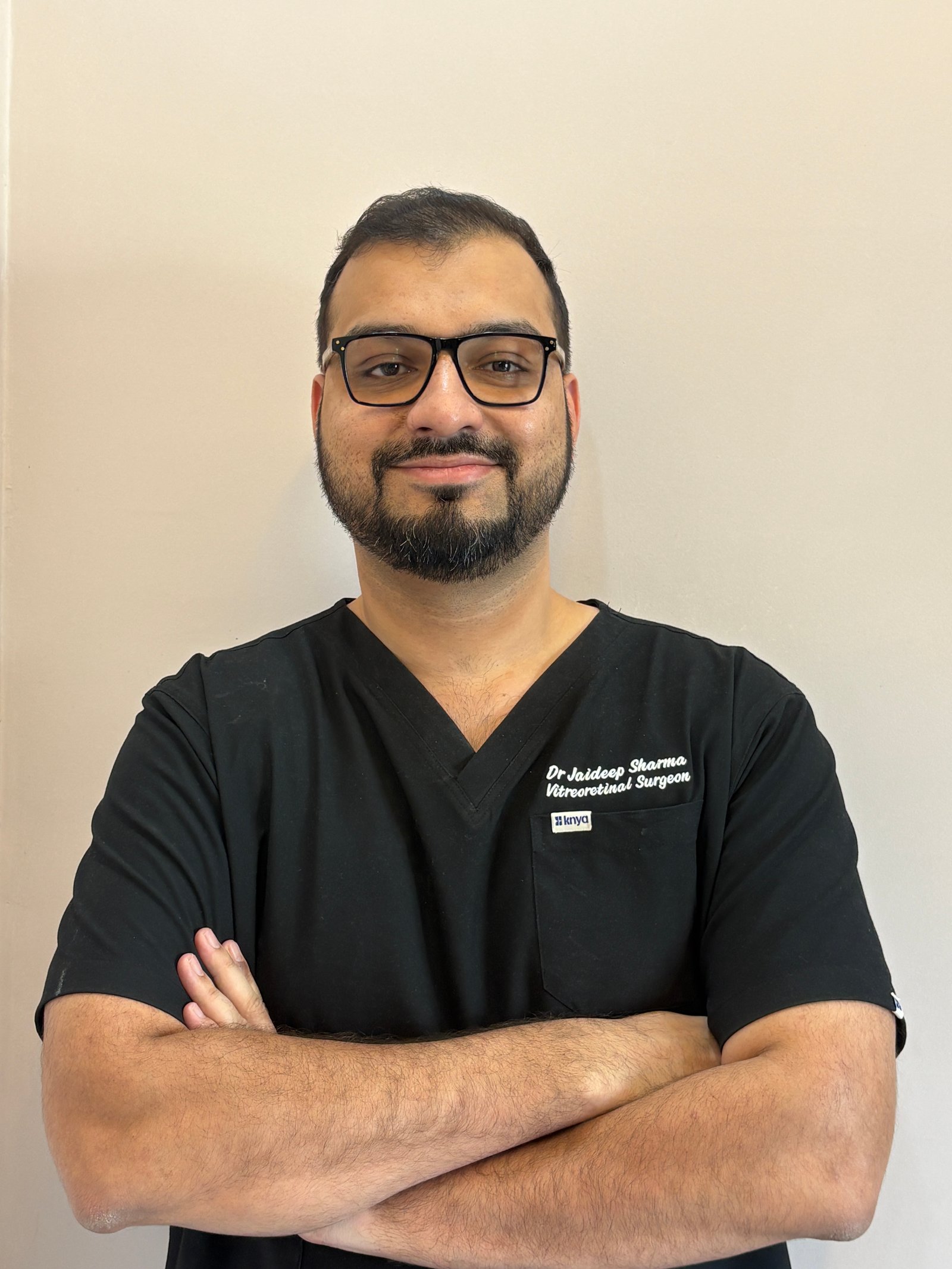
Differentiating a harmless "eye freckle" (nevus) from a malignant melanoma requires highly advanced multimodal imaging. Dr. Jaideep Sharma's diagnostic protocol includes:
- • High-Resolution Ultrasound (B-Scan): To measure the exact millimeter thickness and internal density of the tumor.
- • Optical Coherence Tomography (OCT): To detect microscopic fluid leakage (subretinal fluid) beneath the retina, a strong indicator of active cancer growth.
- • Systemic Staging: Because uveal melanoma has a high propensity to metastasize through the bloodstream directly to the liver, a full-body oncology scan (PET/CT and liver MRI) is coordinated immediately.
The Gold Standard: Plaque Brachytherapy
Historically, the only way to ensure the cancer did not spread to the brain or body was to surgically remove the entire eye (enucleation). Today, the landscape of ocular oncology has transformed. For small and medium-sized tumors, Plaque Brachytherapy is the definitive treatment protocol. It offers the same survival rate as removing the eye, but allows the patient to keep their physical eye and preserve their vision.
Phase 1: Precision Tumor Mapping & Surgery
Brachytherapy involves delivering a concentrated dose of radiation directly to the tumor. A custom-sized "plaque" (a small, bottle-cap-shaped device made of surgical gold) is loaded with radioactive seeds (usually Iodine-125 or Ruthenium-106). During the first surgery, Dr. Jaideep meticulously maps the exact borders of the tumor on the outside wall of your eye (the sclera) and securely sutures the radioactive plaque directly over those coordinates.
Phase 2: Targeted Radiation
The plaque remains sutured to your eye for a highly specific amount of time—typically 3 to 7 days, calculated by an integrated team of radiation oncologists and medical physicists. The thick gold backing of the plaque acts as an impenetrable shield, forcing all the radiation inward directly into the tumor, entirely sparing your brain, the healthy side of your eye, and your loved ones from radiation exposure.
Phase 3: Plaque Removal
Once the exact lethal dose of radiation has been delivered to the cancer cells, you return to the operating room for a brief secondary procedure. The sutures are clipped, the plaque is removed, and the eye heals. Over the next several months, the irradiated tumor will slowly die, shrink, and turn into a flat, inactive scar.
Long-Term Preservation (Radiation Retinopathy)
While the radiation destroys the cancer, it can also cause delayed collateral damage to the fragile, healthy blood vessels of the surrounding retina. This condition, known as Radiation Retinopathy, can cause severe macular swelling and vision loss months or even years after the tumor is gone.
At Prasan Nethralaya, your oncology journey does not end when the plaque is removed. Dr. Jaideep provides intense, lifelong monitoring. By utilizing prophylactic Anti-VEGF injections and targeted laser therapies, we actively manage radiation side effects to safeguard your remaining vision for the rest of your life.