Understanding a Critical Emergency
The retina is the delicate, light-sensitive wallpaper lining the inside back wall of your eye. A Retinal Detachment occurs when this tissue is physically peeled or lifted away from its underlying layer of blood vessels, which provide it with vital oxygen and nutrients. Once detached, the retinal cells begin to die rapidly. This is an absolute medical emergency. If left untreated for even a few days, it will result in permanent, irreversible blindness in the affected eye.
Most detachments begin as a small Retinal Tear or hole. As we age, the jelly-like substance filling the center of the eye (the vitreous) shrinks and pulls away from the retina. Sometimes, it pulls too hard and tears the retina. Fluid then passes through this tear, getting behind the retina and pushing it off the back wall of the eye, much like water getting behind wallpaper.
Immediate Red Flag Symptoms
Retinal detachment is completely painless. The only warning signs are visual. If you experience any of these, contact a retina specialist immediately:
- • A sudden, massive shower of "floaters" or black spots.
- • Bright flashes of light in your peripheral (side) vision.
- • A dark, heavy shadow or "curtain" falling across your vision.
- • A sudden, unexplained drop in your central visual clarity.
The Surgical Repair Protocols
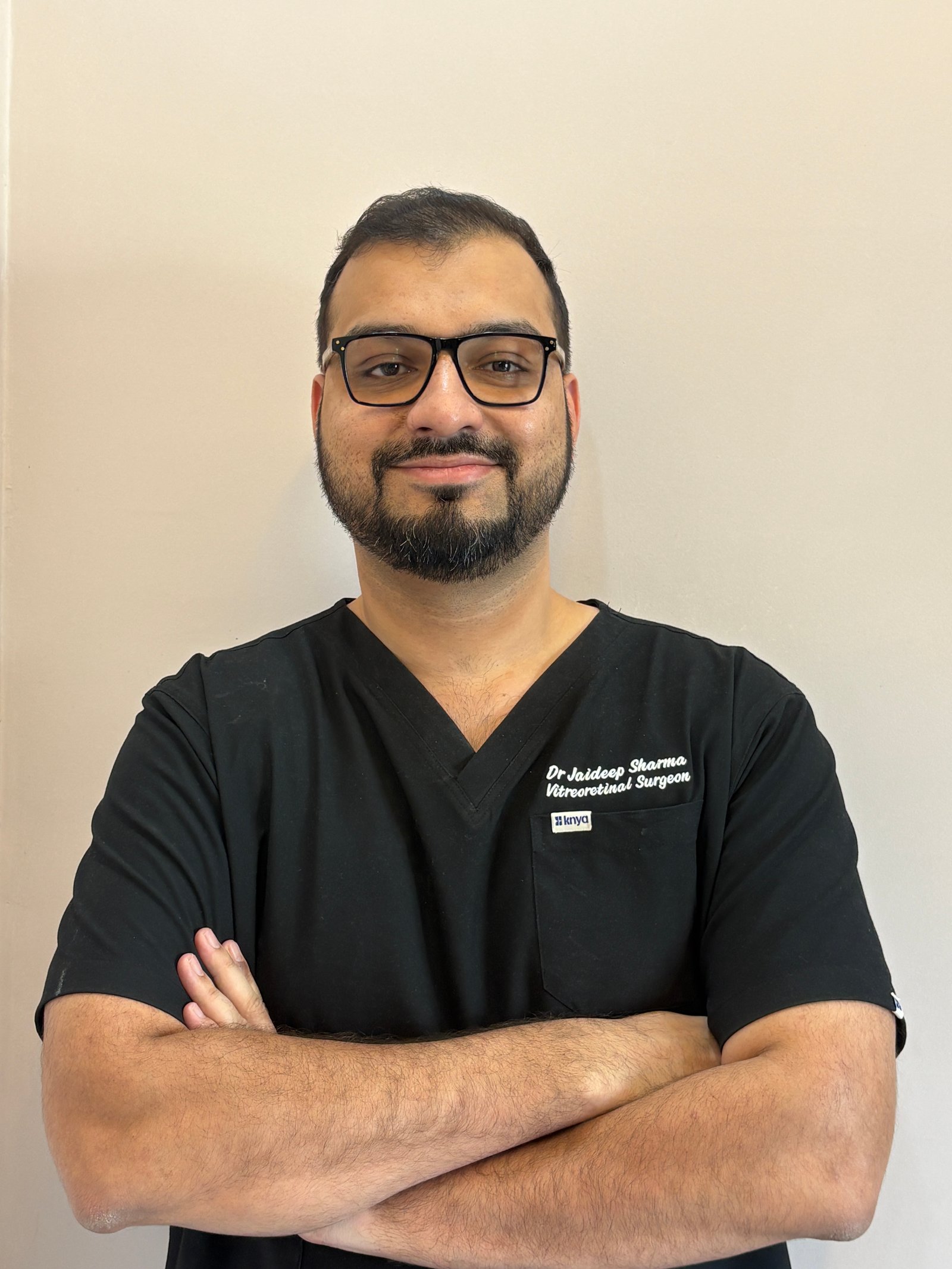
The sole objective of retinal detachment surgery is to find all retinal breaks, seal them, and press the retina flat against the back of the eye so it can heal. Depending on the severity and location of the detachment, Dr. Jaideep Sharma will employ one of three highly advanced surgical protocols.
1. Micro-Incision Vitrectomy Surgery (MIVS)
This is the most common and advanced procedure for repairing a detached retina. Dr. Jaideep makes three microscopic incisions in the white of the eye (the sclera). Using highly specialized microsurgical instruments, the vitreous gel pulling on the retina is completely removed. Once the eye is clear, fluid is drained from beneath the retina to allow it to settle flat. A laser is then used to permanently "weld" the retinal tear closed. Finally, a specialized gas bubble or silicone oil is injected into the eye to hold the retina in place while the laser burns heal.
2. Scleral Buckling
Often used for complex or severe detachments, this procedure involves suturing a flexible silicone band (a "buckle") entirely around the outside of the eye, hidden behind the eyelids. This band gently squeezes the eye inward, pushing the eye wall closer to the detached retina, relieving the traction that caused the tear. The tear is then sealed using freezing therapy (Cryopexy). The scleral buckle is invisible to the outside world and permanently stays on the eye.
3. Pneumatic Retinopexy
For specific, smaller detachments located in the upper portion of the eye, this less invasive office-based procedure may be an option. A small expanding gas bubble is injected directly into the center of the eye. The patient is instructed to keep their head in a specific position for several days so the bubble floats up and presses the detached retina back into place. A laser is then used to seal the tear.
Recovery & The "Face-Down" Protocol
The success of a vitrectomy highly depends on patient compliance during the recovery phase. If a gas or oil bubble is placed in your eye, you must maintain a strict face-down position (or a specific side position dictated by the surgeon) for several days to a week. Because bubbles naturally float up, you must position your head so that the bubble floats directly against the back of the eye where the retina is healing.
Critical Warning: If a gas bubble is used, you absolutely cannot fly in an airplane, travel to high altitudes (mountains), or undergo certain types of general anesthesia until the bubble completely dissolves naturally (which can take 2 to 8 weeks). The change in atmospheric pressure will cause the gas to expand inside the eye, leading to excruciating pain and permanent blindness.